
The first hard freeze warning of the season usually lands on a North Texas forecast in November, and the phone starts ringing that afternoon. The question is always the same: how to protect pool pipes from freezing in Texas, on a pool built to run year round. Keep the water moving and leave the pool full.
Why DFW pools are not winterized like northern pools
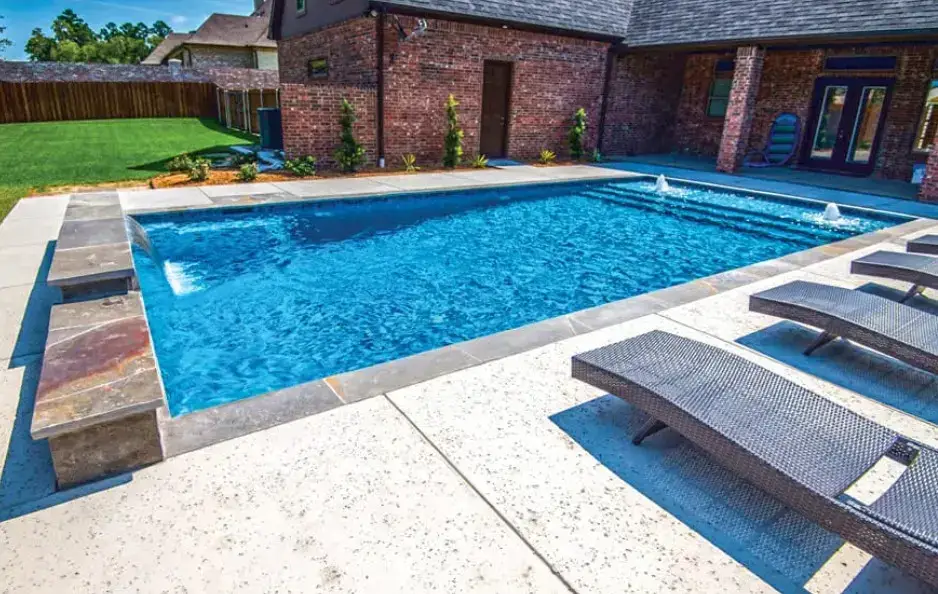
Up north, pools get closed for the season: lines blown out, equipment drained, cover on until April. North Texas sits in the awkward middle. Our freezes are short and rare, so pools here get built with the pad out in the open and PVC (the white plastic pool pipe) running exposed along a wall. In Keller or Southlake that is normal, and fine about 360 days a year. Then a north wind parks us in the low 20s for three days and every exposed part is a liability. So the plan is to run the pool, not close it.
What actually breaks in a freeze
Water expands as it freezes, so anything holding still water in a sealed housing splits first:
- The pump. The wet end and basket housing crack first.
- The filter, at the tank seam or drain plug, and the heater, the priciest item out there.
- Exposed PVC, unions, valve bodies and inline salt cells. A closed valve is a sealed container of still water.
The pool itself takes a skin of ice and nothing more.
How to protect pool pipes from freezing in Texas: keep the water moving
Moving water is far harder to freeze than still water, and circulation is the single best protection you have through a short freeze. When the air is at or below freezing, the pump runs continuously. Not on a schedule, not off overnight to save electricity, and every line should see flow. Circulation is not magic, though. A freeze that lasts days, especially one that takes the power with it, needs the outage plan below.
Freeze protection on your automation, and what to check now
Clear Blue builds with Pentair equipment, and its automation has freeze protection built in. On an EasyTouch or IntelliCenter it starts on its own at roughly 36 degrees and runs until the air is back around 40, so it covers your 3 AM shift. That trigger is not a number you dial in. Other brands use their own thresholds, so check your manual. What you do control is the part that actually fails:
- Which circuits are protected. It is set per circuit, and one is easy to miss. Confirm it is on for the pool, the spa, every water feature and anything on its own valve. A circuit switched off gets no flow, however cold it gets.
- The air temperature sensor. It belongs in shade, away from a heater vent or a sun baked wall. One in afternoon sun reads high and the pump stays off when it should run. Hang a thermometer beside it and compare that against the panel. Several degrees apart means it is misplaced or failing, a service call before winter.
- The valve cycling time. On shared pool and spa plumbing the system splits its freeze run between both sides. Confirm the spa gets real water movement, not a token minute.
If your pool predates automation, it pays for itself the first freeze you are out of town: pool automation upgrades.
No automation? Run a manual freeze plan
Flip the time clock to permanent on so the pump runs around the clock, and open the valves. On a variable speed pump, pick a speed that visibly moves water at every return.
Your checklist for the week before
- Clean the skimmer basket, pump basket and filter. Flow is the protection and a dirty filter chokes it.
- Check the pump lid and its o ring. An air leak costs you the prime and a dry pump dies.
- Sleeve exposed PVC in foam, blanket the pump and filter with vents left clear, cover the hose bib and autofill line.
- Fire the heater now, not at 11 PM on the coldest night of the year.
- Book a tech before the cold arrives, freeze week fills fast: pool service and repair.
The night of a hard freeze, and the 6 AM check
One night at 30, back above freezing by 10 AM, is handled by running the pump and going to bed. Three days that never climb above freezing, with wind, is when equipment dies. Either way: circulation on, valves open, spillover running, cleaner out.
Then look before sunrise with a flashlight: water moving at the returns, pump primed and quiet, water still at the skimmer mouth. A pump that quietly lost prime at 2 AM is the most common way a cold night becomes a repair bill.
When the power goes out
The February 2021 statewide freeze is still the reference point here. What made it so destructive for pool equipment was not the cold by itself, it was days without power, which meant days without circulation. If power drops below freezing, drain the equipment:
- Turn the equipment breaker off so the pump cannot restart dry or frozen when power returns.
- Open the pump lid, pull the drain plugs at the bottom of the housing, set them in the basket.
- Open the filter drain plug and air relief valve and let the tank empty. Pull the heater plugs too.
- Set valves open or half open so nothing traps water, and leave the pool alone.
Once power is back and it is above freezing, reinstall every plug, fill the pump pot and start it while you watch. Equipment only, never the pool.
What not to do
- Do not drain the pool. An empty shell in saturated North Texas clay can shift, for no freeze benefit.
- Do not blow out the lines like a northern closing, or pour hot water on frozen equipment.
Spa, water features and fire features
A spa on shared plumbing rides along on spillover once its circuit is protected. On an isolated valve, confirm it gets flow.
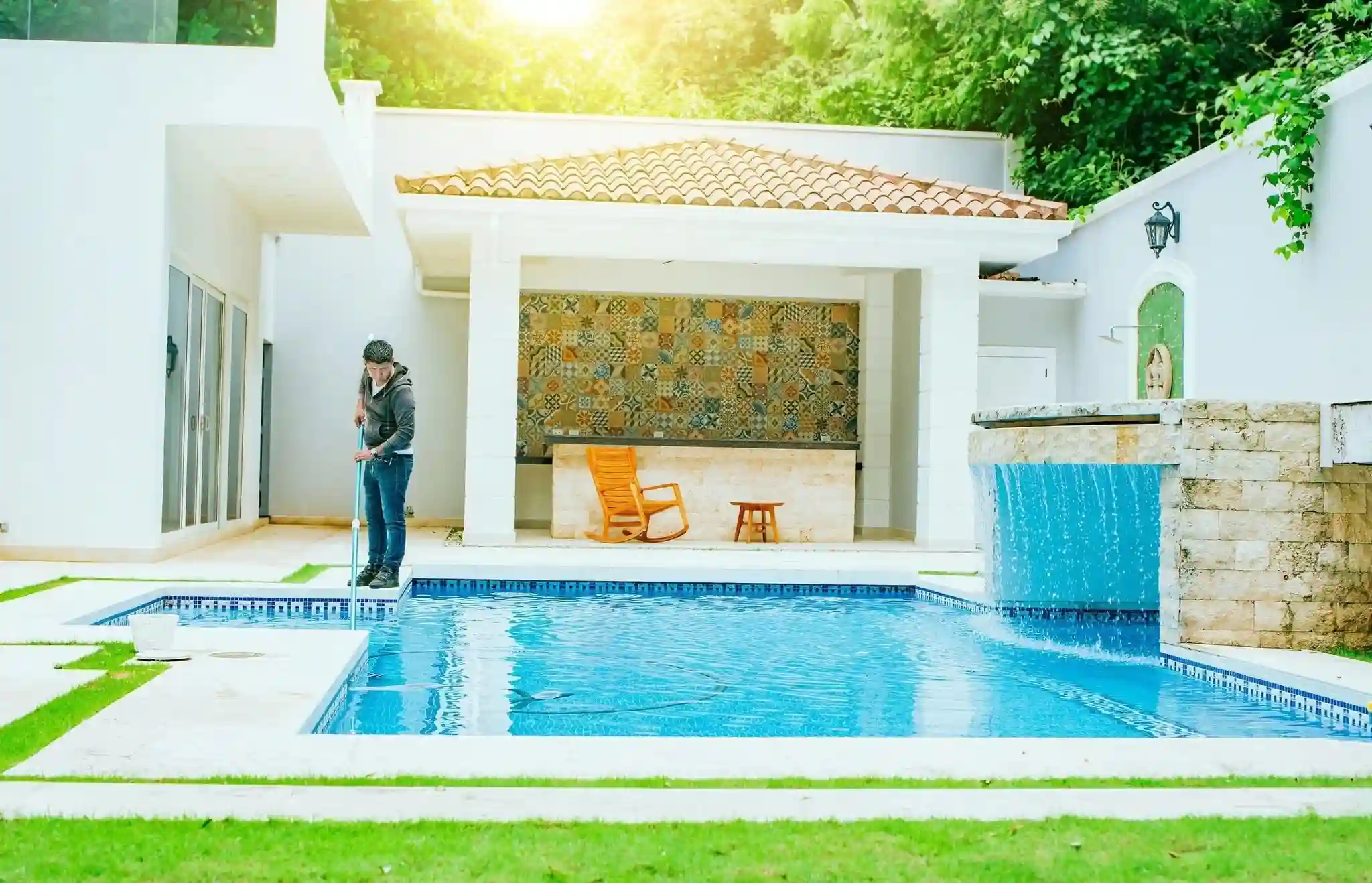
Water features get forgotten. Sheer descents, bubblers and deck jets are small pipe, often exposed at the top of a raised wall, and they only run on demand. Run them through the freeze or drain them, and shut the gas to a fire and water bowl if its burner pan holds ice.
After the thaw: inspect before you turn anything back on
Wait until it is above freezing and staying there, then walk the pad in daylight before flipping a switch. Look for hairline cracks in the pump housing and filter tank, white mineral streaks that mark a slow weep, and bulged plastic. A freeze crack can stay dry until it sees pressure, so a dry pad proves nothing.
Start the pump while you watch every union and the filter gauge, then mark the waterline and check it a day later. More loss than normal evaporation means a leak.
Upgrades worth making before next winter
- Automation, the best freeze money you can spend, since it works while you sleep.
- A heater or a cover. Neither is a freeze plan by itself, but a heater makes a spa usable in January and a cover holds heat. See our pool equipment page and pool covers.
- A service plan, so someone besides you is watching the pad in December: pool maintenance across Dallas Fort Worth.
Frequently asked questions
Do you winterize a pool in Texas?
Not the way northern states do. DFW pools stay full and keep running all winter. The plan is circulation through freezing weather, and draining the equipment only if power fails.
Can I change the temperature my freeze protection turns on at?
On Pentair EasyTouch and IntelliCenter, no. It starts around 36 degrees on its own and runs until the air is near 40, with no set point to raise. Other brands use their own numbers. What you can check: freeze protection enabled on every circuit including the spa and water features, an air sensor in shade that agrees with a thermometer, and a valve cycling time that gives both sides real flow.
Should I cover the pool or drop the water level before a freeze?
Cover it if you like, it holds heat. Never drop the level. Low water is how pumps lose prime and burn up, and an empty pool in North Texas clay is a bigger problem than any freeze.
Get eyes on your pad before the first cold snap
Clear Blue Pools and Backyards is a family owned builder in North Richland Hills, working across 12 cities and 7 counties, from Fort Worth and Keller to Frisco, Southlake and Midlothian. We are a BBB Accredited Business and a PebbleTec Elite Builder, licensed and insured. Want a look at your pad before winter? Get in touch for a free design and quote or call (214) 253-2052.