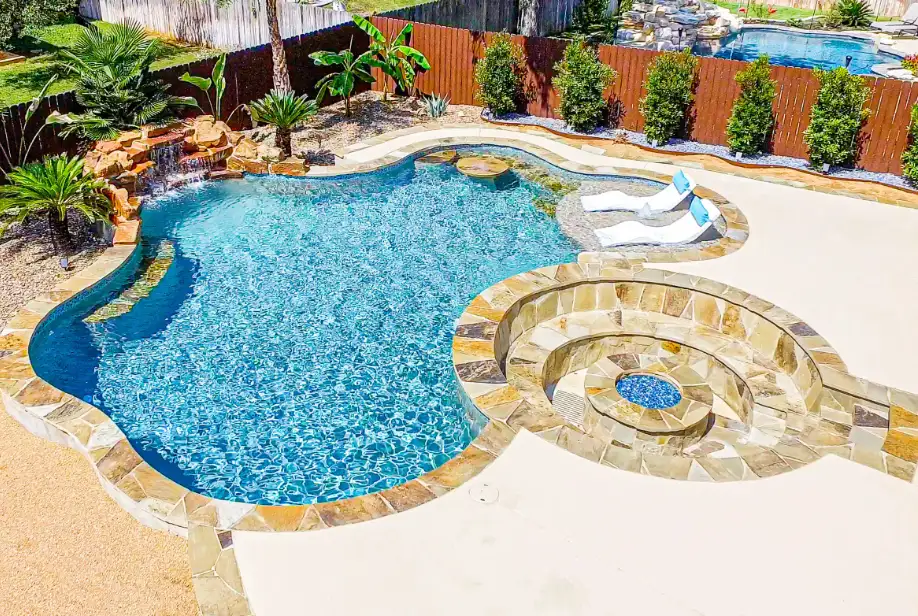
Enjoy the Benefits of a Saltwater Pool with Expert Conversion
Saltwater Pool Conversion in Dallas–Fort Worth
Switching to a saltwater pool offers numerous benefits over traditional chlorine pools. It provides a gentler feel, lower maintenance, and a more natural swimming experience.
At Clear Blue Pools And Backyards, we specialize in saltwater pool conversion, transforming your existing chlorine pool into a low-maintenance, environmentally friendly saltwater pool. Whether you’re looking for a more comfortable swim experience or the convenience of reduced chemical use, we offer expert conversion of your pool to a saltwater pool service that will enhance your pool for years to come.
Reasons to Switch Your Pool to a Saltwater System
Why Convert Your Pool to Saltwater?
Saltwater pools have become a popular upgrade for homeowners looking for a more comfortable and low-maintenance alternative to traditional chlorine systems. They offer a balanced approach to water care while improving the overall swimming experience.
At Clear Blue Pools And Backyards, we help homeowners transition to systems that are easier to manage and more efficient over time.
Benefits of converting to a saltwater pool include:
Softer Water: Saltwater is gentler on the skin and eyes, providing a more comfortable swimming experience.
Reduced Chemical Use: Saltwater systems produce chlorine from salt, reducing the need to buy or store chemicals.
Lower Maintenance: Saltwater pools require less frequent balancing of chemicals and are often easier to maintain.
Environmentally Friendly: Reduces the amount of harsh chemicals introduced into your pool and the environment.
Cost-Effective: While the initial conversion may be an investment, saltwater pools can be more affordable in the long term due to lower maintenance and chemical costs.
Each conversion is designed to improve both comfort and efficiency.
The result is a pool that’s easier to maintain, more enjoyable to use, and better suited for everyday swimming.
Converting your pool to saltwater means more than just easier maintenance. It’s about enjoying a more comfortable and sustainable swimming experience.
Key benefits of saltwater pool conversion:
Softer, Silkier Water: The soft water of a saltwater pool is gentler on your skin and hair, and it's often referred to as feeling more like swimming in the ocean.
Lower Chemical Exposure: Saltwater pools have significantly fewer chemicals, reducing exposure to potentially irritating chlorine.
Cost Savings: Lower maintenance costs and fewer chemicals lead to long-term savings.
Better Pool Health: A saltwater system helps maintain consistent chlorine levels, resulting in cleaner water without harsh chemicals.
The result is a cleaner, more comfortable swimming environment that feels easier to manage and better suited for everyday use.
Why Choose Clear Blue Pools And Backyards for Your Saltwater Pool Conversion?
Switching to a salt-based system requires the right expertise to ensure everything runs smoothly from start to finish. The quality of the setup directly impacts performance, ease of use, and long-term reliability.
At Clear Blue Pools And Backyards, we focus on delivering a seamless upgrade that improves how your pool operates and feels.
Homeowners choose us because we offer:
Experienced Pool Builders: We have extensive experience converting pools to saltwater systems, ensuring quality and reliability.
Expert Guidance: We help you select the right equipment and system for your pool’s size and style.
Quality Equipment: We use only the best saltwater chlorinators and equipment for seamless, long-lasting results.
Professional Installation: Our team handles the entire process from start to finish, ensuring everything is installed correctly.
Ongoing Support: We provide clear instructions for pool care and offer continued support post-installation.
We don’t just convert pools, we upgrade your pool experience for greater comfort and efficiency.
Switching your pool to a salt-based system is a smooth and well-managed process when handled correctly. At Clear Blue Pools And Backyards, we focus on making the transition simple, efficient, and easy to understand.
Here’s how the process works:
1. Initial Assessment We review your current setup, check equipment condition, and understand how you use your pool to plan the right approach.
2. System Setup A salt chlorination unit is installed, allowing your pool to generate its own sanitizing system from dissolved salt.
3. Conversion & Balancing Salt is added, and the water is adjusted to achieve the right balance for consistent performance.
4. Testing & Walkthrough We test everything thoroughly and guide you on how to manage the system with minimal effort.
Each step is handled with care to ensure a smooth transition.
The result is a system that runs more consistently, requires less manual intervention, and makes everyday pool care easier.
Trustindex verifies that the original source of the review is Google.
Very responsive company. Lynn is great and was very patient with me and my million questions. Work was impeccable. Would definitely recommend!
Posted on Google
J M
4 December 2025
Trustindex verifies that the original source of the review is Google.
It’s stressful trusting a pool company and feel confident in the work and results. Customer care is important and guarantees as well. I felt this confidence when hiring clear blue pools and backyards. The pool came out beautiful and exactly how my wife envisioned. Throughout the process we felt comfortable and heard. I would recommend their service to our friends and family.
Our Service Areas Across Dallas–Fort Worth
Clear Blue Pools And Backyards provides professional pool deck resurfacing and concrete repair services throughout the Dallas–Fort Worth area. Our team works across multiple locations, ensuring consistent quality and reliable service wherever you’re located.
Tarrant County
Fort Worth
Colleyville
Southlake
Keller
Benbrook
Collin County
Frisco
Johnson County
Mansfield
Dallas County
Dallas
Sachse
Denton County
Denton
Parker County
Aledo
Ellis County
Midlothian
Start Your Saltwater Pool Conversion Today
Ready to convert your pool to saltwater? Our team will guide you through the conversion process and ensure that your pool is set up for a smoother, more efficient experience.
Saltwater pool conversion involves installing a system that generates chlorine from salt. This allows the pool to maintain clean water automatically, reducing the need for manual chemical handling and frequent adjustments.
No, converting a pool to saltwater is a straightforward process when done professionally. It involves installing a salt chlorination system and adjusting water chemistry for proper balance and long-term performance.
Yes, saltwater pools still use chlorine, but it’s generated naturally from salt. This results in more stable levels and a softer feel compared to traditional chlorine pools.
Saltwater pool conversion can reduce maintenance by keeping chlorine levels more consistent. This means fewer manual adjustments and less frequent chemical handling compared to traditional systems.
Yes, many people find saltwater pools gentler on skin and eyes. The lower concentration of harsh chemicals creates a more comfortable swimming experience without the strong chlorine smell.