
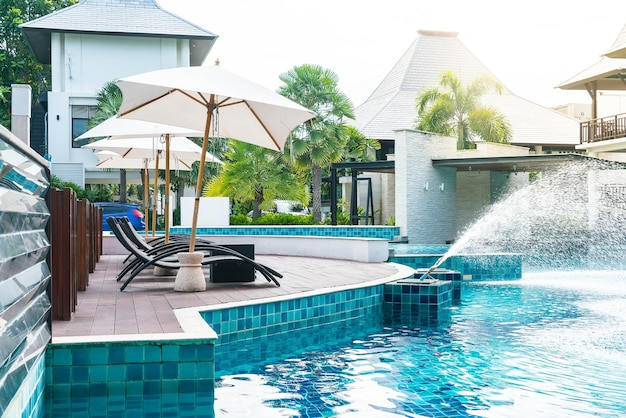
Most people arrive at the design conversation with a picture saved on their phone. That is a good place to start and a bad place to finish, because the pool in the picture was built for a different yard, a different family and usually a different climate. The useful question is not which pool looks best. It is which pool you will still be glad you built in year six.
This is a walk through the decisions that actually shape that answer: how you will use the water, what shape and size the lot will carry, which features are worth committing to before the shell goes in, and what North Texas specifically does to all of it. If you would rather look than read, pools we have already built is the shorter version.
Start With How You Will Actually Use the Water
Every other decision follows from this one, and it is the one people skip. A pool built for lap swimming and a pool built for a family with young children are not slight variations on each other. They are different depths, different shapes, different edges and different budgets.
Family swimming
Families want more shallow area than they expect and less deep end than they think. A long, gently graded shallow section gets used constantly. A deep end past about six feet gets used for a few years and then mostly does not, while costing money to build, heat and treat. Safety belongs in the design rather than added afterward: entry and exit points where an adult can see them from the house, non-slip decking, and pool fencing planned into the layout instead of bolted around it later.
Lap swimming and fitness
Swimming laps properly needs length and a consistent depth, ideally a straight run of at least twenty five feet with no shelf interrupting the lane. That does not mean the pool has to look like a swim club. A rectangular pool with the lane along one side and seating at the other end handles both jobs. What does not work is a curved pool with a lane retrofitted into it, which is a compromise that satisfies nobody.
Relaxing and entertaining
If the pool is mostly for evenings and weekends with people around it, the water is only part of the project. Deck area, seating, shade and lighting do more of the work than the pool itself. This is where the wider outdoor living plan matters more than the shell: an outdoor kitchen, patios and retaining walls that give people somewhere to stand, and a shade structure so the space is usable before sunset in July.
Pool Shapes and Sizes: Matching the Design to the House and the Lot
Pool shapes and sizes are usually presented as a style choice. They are mostly a fit problem. The shape that works is the one that respects the lot lines, the drainage, the access route for equipment during the build, and the architecture of the house it sits behind.
Geometric pools
Straight lines, defined corners, rectangles and L-shapes. A geometric pool suits a modern or transitional house, and it suits a rectangular suburban lot, which describes a great deal of North Texas. It is also the most efficient shape per square foot of water: no awkward corners to circulate, simpler to cover, simpler to fence, and generally the most usable swimming area for a given footprint.
Freeform pools
Curved, irregular edges that read as landscape rather than architecture. A freeform pool works when the yard has grade to it, mature trees, or a view worth bending the shape around, and it works with traditional and ranch-style homes that would look severe with a rectangle behind them. The trade-off is real: curves cost more per gallon of water, and they create low-flow corners that need the circulation designed properly rather than assumed.
Smaller lots and pool design for a small backyard
A small yard does not rule out a pool, it rules out a badly planned one. Compact and plunge-style designs, sixteen to twenty feet long, work genuinely well when the goal is cooling off and sitting in water rather than swimming lengths. The mistake on a small lot is spending the whole footprint on water and leaving no deck, which produces a pool nobody can gather around. Getting the water-to-deck ratio right matters more here than anywhere else, and so does the decking around it.
Not sure what your yard will actually take?
That is the question a site visit answers in about twenty minutes, and we include a free 3D design so you can see the options in your own backyard before you commit to anything. Call Clear Blue Pools and Backyards at (214) 253-2052 or tell us about the yard, and we will come and look at it.
The Features Worth Deciding On Before the Shell Is Poured
Some things can be added to a pool later at reasonable cost. Others are structural, and adding them afterward means breaking concrete. Knowing which is which is most of the value of the design stage, and it is worth walking the feature list worth walking through properly rather than deciding at the last minute.
Sun shelves, tanning ledges and baja shelves
Four names, one feature: a shallow platform, usually eight to twelve inches deep, wide enough to sit or lie on with the water just covering you. Depending on who is selling it, you will hear sun shelf, tanning ledge, baja shelf or baja step. It has quietly become the most requested single feature in Texas pools, and the reason is obvious once you have spent an August afternoon on one. It is the part of the pool adults actually use, it is where toddlers can be supervised safely, and with in-water loungers on it, it does more for daily use than any other square footage in the pool. It is structural. Decide on it now.
Spas, spillovers and hot tubs
A spa built into the pool shell shares the equipment and the water, which is cheaper to run than a standalone unit and looks like part of the design rather than an appliance parked nearby. A spillover spa raised above the waterline gives you the sound of moving water without a separate feature, and it is the detail people notice first in the evening. If you already have a pool, a spa can be added to a pool that is already in the ground, though it is meaningfully simpler when it is planned from the start.
Swim-up seating and swim-up bars
Bench seating along an edge, sometimes paired with a bar top on the deck side, so people can sit in the water and still be part of what is happening on the patio. It works best when it is oriented toward wherever the cooking happens, which is why it should be designed at the same time as the grill and prep area rather than after it.
Water features, fire features and lighting
These are what the pool looks like after dark, which in Texas is when a lot of the using happens. Fire features extend the season at both ends and give the space a focal point that is not the water. Lighting decisions are cheap at the design stage and expensive later, because the conduit runs go in with the shell. The same is true of the tile and coping, which sets the colour of the water more than anything else does.
Designing for a North Texas Backyard
This is where generic pool advice stops being useful. A design that works in Arizona or Florida is not automatically right here, and a few local realities should shape the plan from the first sketch.
The soil moves. Much of the DFW area sits on expansive clay that swells in wet weather and shrinks hard in a dry August. It is the same reason foundation repair is a whole industry here. It affects how the shell is engineered, how the decking is jointed, and where you can reasonably put a raised feature. It is not a reason to worry, it is a reason not to take a design drawn for another market at face value.
The sun is the other constant. Which side of the house the yard sits on determines whether the pool gets full afternoon exposure, and that decision has consequences all the way down the line: water temperature, evaporation, how quickly the deck surface becomes unwalkable barefoot, and how hard the water is to keep balanced. West-facing yards benefit most from shade planned into the design rather than added later.
Water hardness matters too. Municipal water across much of the region carries high calcium, which shows up as scale on tile lines and inside equipment. It influences tile choice, whether a salt system is a good fit, and how the maintenance plan should look. There is more on that in our piece on how Texas sun treats pool water.
Lot character changes across the metroplex. Established neighbourhoods in Southlake and Colleyville tend to have larger, more mature lots where a freeform design and existing trees can work together. Newer builds around Frisco more often mean a tighter rectangular lot with limited side access, which affects both the shape that fits and how equipment reaches the yard during construction. We work across everywhere we work from North Richland Hills, roughly a 75 mile radius.
Designing for What It Costs to Run, Not Just to Build
The cheapest pool to build is rarely the cheapest pool to own, and the gap shows up in the first full summer. Variable speed pumps and correctly sized the pumps and filters behind it make a substantial difference to a Texas power bill, because the pump runs long hours here. LED lighting draws a fraction of what older fixtures did. A salt system changes how the water feels and how sanitizer is delivered, though it is not maintenance-free and hard water means the cell needs attention.
Two more worth planning for rather than retrofitting: a fitted cover, which cuts evaporation and chemical demand more here than in most of the country, and controls that let you run the whole system from your phone. And think about what goes in the beds around the water, because planting around the water either keeps leaves out of the pool or delivers them into it, depending on how it is sited.
How the Design Conversation Actually Goes
It starts with a visit. We look at the yard, the access, the grade and the sun, and we listen to how you describe using it, which is usually more revealing than a list of features. From there we put together a free 3D design so you are looking at your own backyard rather than at someone else’s pool. If the plan needs a second pass, it gets one before anything is priced. Pricing and contract come after the design is settled, not before, and there are ways to spread the cost if the timing matters more than the budget.
If what you have is an existing pool that no longer matches how you live, that is reworking the pool you already have rather than a new build, and a good deal of what is above still applies. If it is a new build, here is what a new build actually involves. Either way, homeowners we have built for is a fair place to check how we work, and there is more on what is changing in outdoor living if you are still gathering ideas.
Frequently Asked Questions
What pool shape works best for a standard suburban lot?
A geometric shape, usually a rectangle or an L, fits a rectangular lot most efficiently and leaves the most usable deck. Freeform designs come into their own on larger or sloped lots, or where mature trees and grade give the curve a reason to exist. On a tight lot a curved pool often costs more and swims smaller.
What is a baja shelf, and is it the same as a tanning ledge?
Same feature, different names. A baja shelf, sun shelf, tanning ledge or baja step is a shallow platform around eight to twelve inches deep, wide enough to sit or lie on. It is the most requested feature in Texas pools, and because it is part of the shell it needs to be decided before construction rather than added later.
How small can a backyard be and still take a pool?
Smaller than most people assume. Compact and plunge-style designs around sixteen to twenty feet work well when the goal is cooling off rather than swimming lengths. The limiting factor is usually not the water, it is leaving enough deck to stand and sit on, plus access for equipment during the build.
Can features be added to a pool after it is built?
Some can. Lighting upgrades, automation and salt conversion are all retrofits we do regularly. Structural elements are different: shelves, benches, raised spas and built-in seating are part of the shell, so adding them later means breaking concrete. That is the main reason the design stage is worth taking slowly.
Do you provide a design before we commit to anything?
Yes. We provide a free 3D design so you can see the pool in your own yard before any decision is made. If the first version is not right, we adjust it and come back. Pricing follows the design.
Which areas do you design and build in?
We are based in North Richland Hills and work across roughly a 75 mile radius, covering most of the DFW metroplex including Dallas, Fort Worth, Frisco, Southlake, Colleyville, Keller, Denton, Mansfield and the surrounding towns. Call (214) 253-2052 and we will tell you whether your address is in range.
The best time to change a pool design is before it exists.
Everything above is easier to decide with someone standing in the yard with you. Call Clear Blue Pools and Backyards at (214) 253-2052 or send us a few photos of the yard, and we will come out, take a proper look, and put a free 3D design in front of you before you commit to anything.