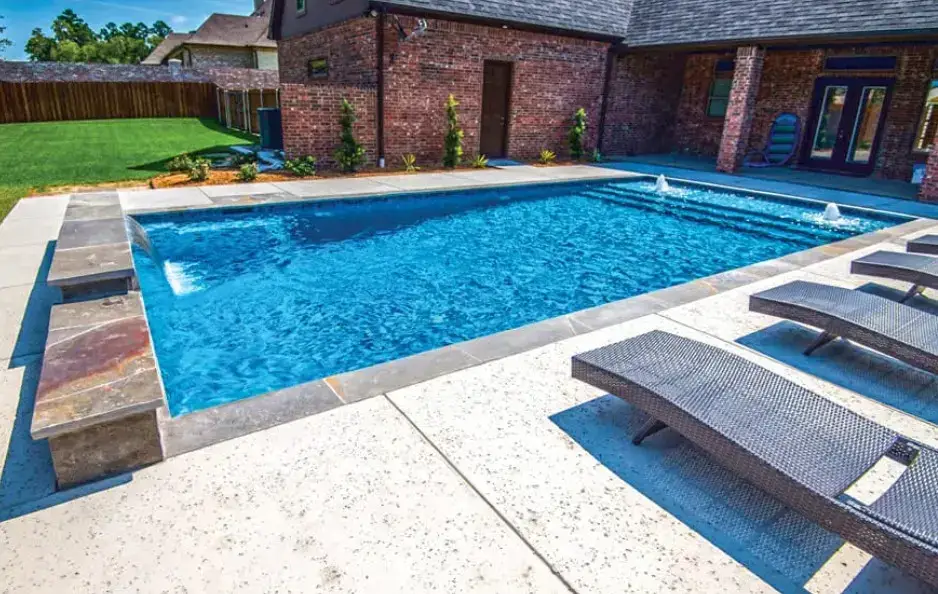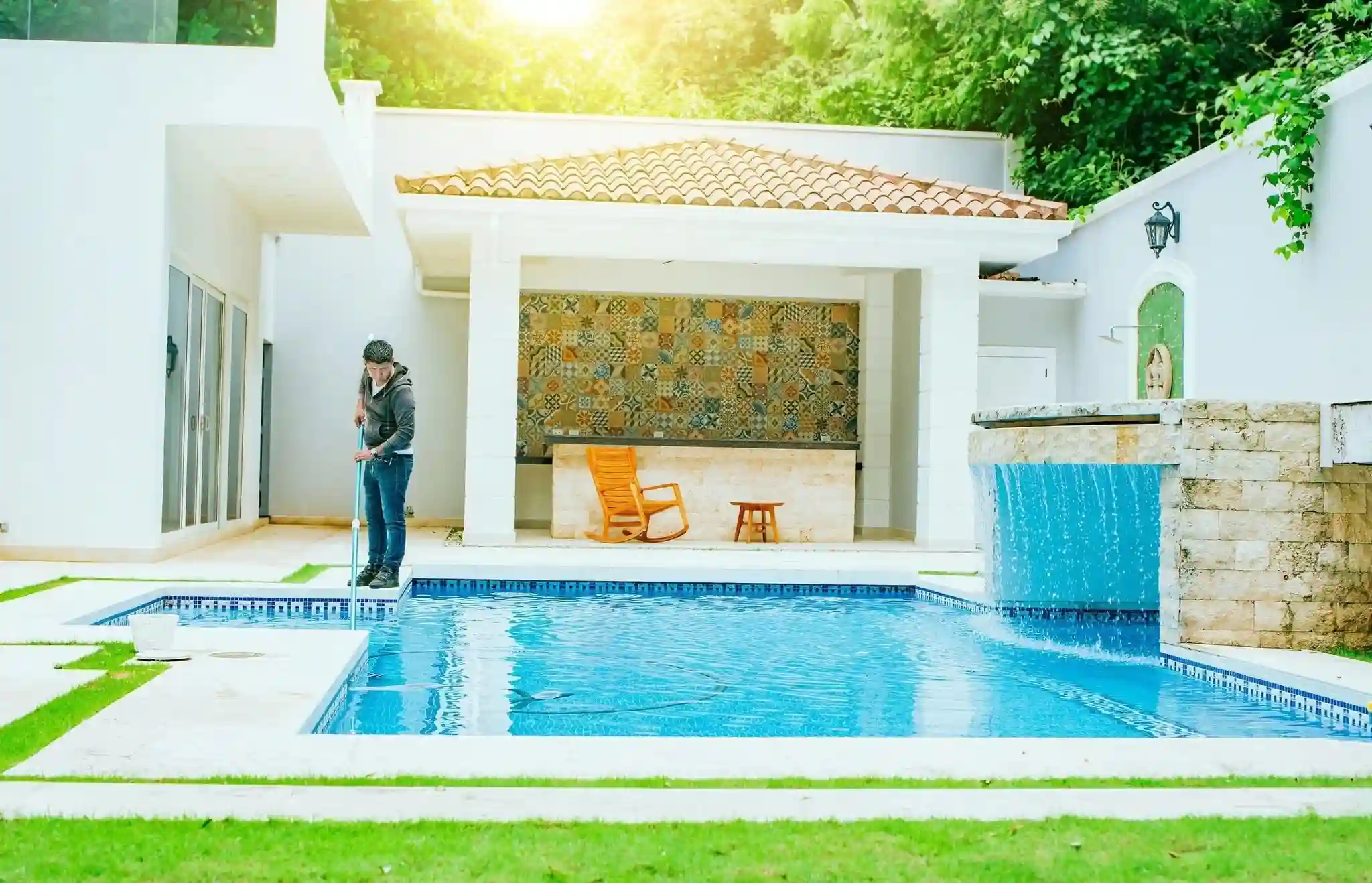


How long does it take to build a pool in DFW is the first real question almost every homeowner asks us, and our answer never changes: most builds run four to eight weeks, depending on complexity, site conditions and the features you pick. A clean rectangle with a simple deck lands near the short end. A raised spa, a tanning ledge, custom decking and full automation land near the long end.
What it does not cover is everything before the first shovel. Here is the build the way it runs off our schedule, including the quiet days that make it feel like the job stopped.
How long does it take to build a pool in DFW, start to finish
Think of it as two clocks. The first is design, engineering and permitting. The second is the four to eight weeks of construction, and only that one is really ours to control. Our published process runs in five stages: consultation and design, planning and permits, construction and installation, finishing and enhancements, then startup and ongoing support. Inside the build itself the order never changes: excavation, steel, plumbing, concrete shell, tile, coping, decking and interior finish. What changes is how long each stage waits on weather and inspectors.
The weeks before week one: design, engineering and the permit packet
Most of the first site visit has nothing to do with the pool shape. Where the utilities run. Where the easement sits. How much fall the yard has. Whether a machine can even reach the back, because a 36 inch gate on a zero lot line home in Frisco is a very different dig than an acre in Aledo.
Then the plan is engineered with structural steel specified and the permit packet goes to your city. This is the phase that quietly costs pool projects the most time. Two things drive it:
- Your city’s queue. A Fort Worth review slot and a Frisco or Mansfield slot are not the same wait, and paperwork touching two jurisdictions can lose a week to that alone.
- Your HOA. Neighborhoods in Southlake, Colleyville and the master planned parts of Frisco often run an architectural review committee that signs off first, and those committees usually meet once a month. Submitting the day after a meeting is an expensive miss.
Layout and excavation: the day the backyard changes
We paint the shape on the ground, you walk it, and once you sign off the dig starts, usually a day or two of work.
North Texas dirt decides a lot here. On the Dallas side you are in heavy Blackland Prairie clay, which digs clean when dry and turns unworkable when wet. West toward Aledo, Benbrook and Parker County you can hit limestone rock instead, which is slower work. We tell you what we expect before we dig, and the moment the dig says different.
Steel, plumbing and electrical rough in, and the first inspections
The rebar cage gets tied by hand to the engineered plan, and this is the week you can see the skeleton of the pool. Plumbing lines get trenched and pressure tested, conduit gets run, then the city comes out. That inspection is a scheduled slot, not a phone call, so this is where your calendar starts belonging to city hall.
Shell day, and the quiet week that follows
Shell day is loud, fast and the best day to watch. The concrete gets shot and hand carved by the nozzle crew, steps and benches shaped in place. By late afternoon your yard finally looks like a pool. Then everyone leaves, and for several days it looks like the job died. It did not.
That is the cure window. Concrete does not get strong by drying out. It gets strong through a reaction that needs water, which is why we ask you to hose the new shell down a few times a day for roughly a week. A shell that dries too fast can craze or lose strength, and no schedule is worth that. August makes it matter more here, because a shell sitting through 100 degree afternoons pulls moisture out fast. Summer builds get watered more, not less.
Tile, coping and decking
Waterline tile and coping get set by hand once the shell is ready. Then decking, the stage where your own choices move the calendar most. A broom finish concrete deck goes down fast. Travertine, pavers or a wraparound with seat walls take longer to install and longer to cure before anyone walks on them. The options are on our pool decking page.
Equipment set, automation and the bonding inspection
The Pentair equipment pad gets built and plumbed, the heater and automation get wired, and the electrician ties in the bonding grid, the safety loop connecting the metal in and around the pool to a common ground. The city inspects that too, and if you want your phone running the lights, spa and heater, it gets set up and tested here.
Interior finish and startup
The interior goes on in one continuous day and the hose goes in the second the crew steps out. It cannot sit dry and the fill cannot stop partway or you get a ring on a brand new finish. Filling usually takes most of a day. Then we start the equipment, balance the water and walk you through your system.
Plaster, aggregate and pebble each carry a different price, texture and lifespan, and we walk you through that choice in our guide to pool interior finishes.
Water chemistry and your first two weeks
A new interior finish is still curing underwater, so it needs daily brushing, careful chemistry, and no robot dragging across it yet. We stay on it with you through that stretch, and every build carries a one year craftsmanship warranty.
The five things that actually delay a DFW pool, ranked
- Rain and wet clay. One storm run in spring stops excavation across the whole metro at once, which is why shell crews back up for weeks in April and May. A delay on somebody else’s job in Keller becomes a delay on yours in Denton.
- Permit and inspection queues. Different city, different wait, every time.
- Change orders mid build. Adding a spa or moving a bench after the steel is tied means re-engineering and re-inspecting. Sometimes worth it, never free.
- Site surprises. Rock, an unmarked line, a gate too narrow, a septic field in the way.
- HOA and material lead times. A committee that meets monthly, or a tile on backorder, can hold up a whole stage.
Why a fall start beats a spring start in this metro
Everybody in North Texas decides they want a pool the first warm Saturday in March, which is exactly why March signers wait. Permit desks get busy, shell crews book out, then the spring storm pattern parks over the metro and nobody digs for days at a time.
A September or October start flips that. The ground is workable, crews have room, and the permit work happens while the weather is mild instead of while it is costing you swim days. Fall puts your family in the water ahead of the first hot weekend instead of four weeks behind it.
What we handle so you are not chasing city hall
Clear Blue Pools and Backyards is a family owned builder, BBB Accredited, licensed and insured, based in North Richland Hills. We build custom concrete pools with structural steel and Pentair equipment across 12 cities and 7 counties, from Dallas and Fort Worth out to Aledo, Midlothian and Sachse. Permitting, approvals, inspections and crew scheduling are our job, so you are never the one calling a permit desk on your lunch break. The whole process is on our new pool construction page.
Frequently asked questions
How long does it take to build a pool in DFW from the first phone call?
Construction runs four to eight weeks. Before that comes consultation and design, then engineering and permitting, which varies by city and by whether an HOA committee has to sign off. We give you a realistic date for both stages up front.
Why does nothing happen for days after the shell is shot?
That pause is the cure window, and it is deliberate. Concrete gains strength through a reaction with water, not by drying, so the shell gets watered several times a day for about a week before tile and coping start.
Is fall a bad time to start a pool in North Texas?
It is usually the best time. Crews and permit desks are less backed up than in April and May, the ground is workable, and you finish ahead of the spring rush.
Ready to see what fits your yard and your budget? We will come out, measure, and put a real design and a real timeline in front of you at no charge. Call (214) 253-2052 or request your free design and quote, and we will get you on the fall schedule.